
Cannabis Tissue Culture: What It Is, How It Works & Why It Matters
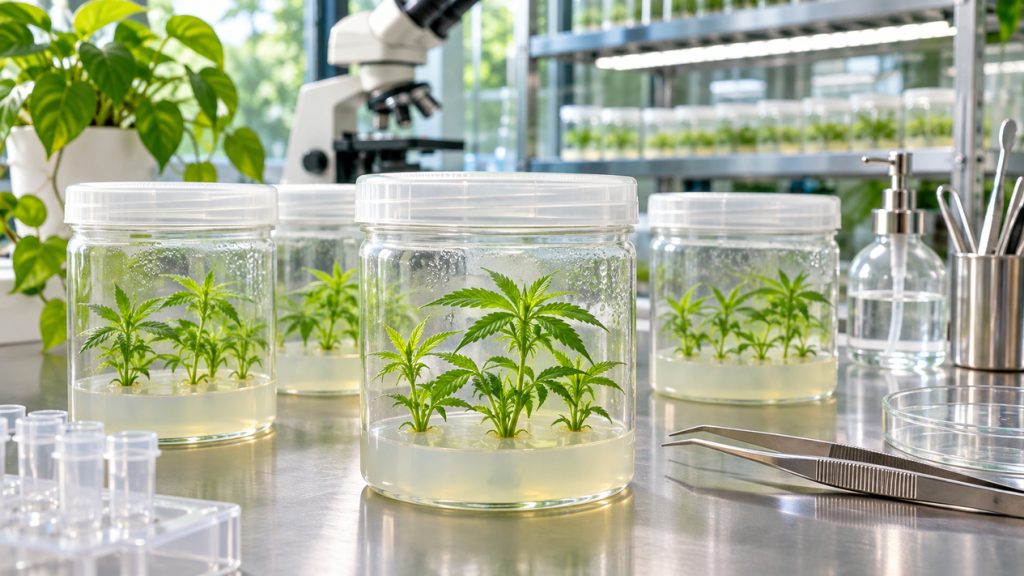
Cannabis growers are always looking for better ways to preserve genetics, improve plant health, and propagate strong, consistent plants. For most growers, that usually means keeping mother plants and taking clones. But there is another method that has become increasingly important in modern horticulture: tissue culture.
If you have heard the term before, it may sound highly technical or something reserved only for laboratories and large commercial facilities. While it is certainly more specialized than taking a cutting from a mother plant, the core idea is actually simple. Tissue culture is a way of growing new plants from very small pieces of plant material in a clean, controlled environment.
For cannabis, tissue culture has gained attention because it offers potential advantages in genetic preservation, propagation, plant health management, and long-term storage of valuable cultivars. At the same time, it is not a magic shortcut, and it comes with its own challenges.
In this guide, we will break down what cannabis tissue culture is, how it works, why growers use it, and where it fits into the bigger picture of cannabis cultivation.
What Is Cannabis Tissue Culture?
Cannabis tissue culture is a propagation method in which tiny pieces of plant material are placed into a sterile growing environment containing water, sugars, nutrients, and plant growth regulators. Under the right conditions, those small pieces of tissue can develop into shoots, roots, and eventually complete plants.
A key concept behind tissue culture is totipotency. In simple terms, totipotency means that plant cells have the ability, under the right conditions, to regenerate into whole plants. That is what makes tissue culture possible.
When growers talk about tissue culture, they are often referring to micropropagation, which is the process of producing multiple plants from small starting material. In cannabis, this usually involves working with shoot tips, nodal segments, or other carefully selected tissues from a healthy donor plant.
It is also worth clearing up a common misunderstanding: tissue culture is not the same thing as genetic modification. The goal is not to alter the plant’s DNA. Instead, it is typically used to preserve and multiply existing genetics in a clean, controlled setting.
Tissue Culture vs. Traditional Cannabis Cloning
Most cannabis growers are already familiar with traditional cannabis cloning. You take a cutting from a mother plant, place it in a rooting medium, maintain the proper environment, and wait for roots to develop. It is simple, accessible, and effective.
Tissue culture serves a similar overall purpose — creating new plants from existing genetics — but the process is very different.
With traditional cloning, you are working with larger cuttings in a normal grow environment. With tissue culture, you are working with much smaller pieces of plant tissue in sterile containers, often on nutrient gel or other specialized media.
Here are some of the main differences:
Traditional Cloning
- Simple and familiar for most growers
- Lower startup cost
- Easier to do at home
- Requires space for mother plants
- Can spread pests, pathogens, or latent infections if the donor plant is compromised
Tissue Culture
- More specialized and technically demanding
- Requires sterile technique and more equipment
- Can preserve genetics in a compact way
- Useful for producing many plants from limited starting material
- May help with sanitation and long-term genetic maintenance
For the average home grower, traditional cloning is still the more practical method. But tissue culture becomes especially interesting when preserving valuable cultivars, managing large collections, or trying to maintain cleaner source material over time.
How Cannabis Tissue Culture Works
Although tissue culture can become highly technical, the process can be understood in a few general stages.
1. Selecting Plant Material
The process begins by choosing tissue from a healthy donor plant. This source plant matters a lot, because tissue culture does not automatically turn poor material into excellent material. Starting with vigorous, desirable genetics gives the best chance of success.
2. Surface Sterilization
Because contamination is one of the biggest challenges in tissue culture, the plant material must be carefully cleaned before being introduced into the culture environment. Bacteria and fungi that are harmless in a normal grow room can quickly overrun tissue culture containers.
3. Establishing the Culture
The sterilized plant material is placed on a nutrient medium designed to support growth. This medium provides water, sugars, minerals, vitamins, and sometimes plant hormones that influence development.
4. Multiplication
Once the culture is established, the goal is often to encourage the plant tissue to produce multiple shoots. This is the stage that makes tissue culture appealing for propagation, since one small piece of plant material can eventually give rise to many plants.
5. Rooting
After shoots are produced, they are encouraged to form roots so they can transition into complete plantlets.
6. Acclimation
This final stage is sometimes overlooked, but it is very important. Tissue-cultured plantlets have been growing in a protected, high-humidity environment. Moving them into normal conditions takes care and patience. They must gradually adapt to lower humidity, stronger airflow, and a more typical growing environment.
Although tissue-cultured plantlets differ from seedlings grown from seed, many of the same early plant care principles apply once they’re established outside the laboratory. Our Cannabis Seedling Guide explores important fundamentals such as lighting, watering, and maintaining a stable growing environment.
This overview is enough for a general guide because it helps readers understand the process without turning the article into a technical lab manual.
Why Tissue Culture Matters for Cannabis Growers
Tissue culture matters because it addresses some of the biggest long-term challenges in cannabis cultivation: preserving genetics, producing uniform plants, and improving propagation systems.
Genetic Preservation
Many growers eventually come across a plant they want to keep for years. Maybe it has a special aroma, a standout effect, strong vigor, or simply sentimental value. Traditionally, preserving that cultivar often involves maintaining a cannabis mother plant over an extended period.
That works, but mother plants require space, labor, lighting, and ongoing maintenance. Tissue culture offers another option. Instead of maintaining a large living mother plant, growers and nurseries may be able to preserve genetics in a much smaller, more controlled form.
For breeders, collectors, and anyone managing a library of cultivars, this can be a major advantage.
Efficient Propagation
Tissue culture can also be a powerful propagation tool. Once protocols are dialed in, it can allow growers to produce many plants from a relatively small amount of starting material.
That is especially useful when the goal is to scale up clean, consistent plant production.
Uniformity
Consistency matters in cultivation. When plants are more uniform, it becomes easier to manage feeding, irrigation, canopy structure, and harvest timing. Tissue culture can help support that uniformity by providing a controlled propagation pathway from selected genetics.
Space Efficiency
A room full of mother plants takes up valuable space. Tissue culture can help reduce the footprint needed for maintaining genetics, which may be particularly valuable for nurseries, breeders, or operations dealing with many cultivars.
Tissue Culture and Plant Health
One of the most interesting aspects of tissue culture is its role in plant health management.
Cannabis plants can carry pests and diseases, but they can also carry less obvious problems such as viruses or viroids. A plant may look acceptable at first glance while still serving as a source of ongoing issues in propagation.
Because tissue culture is performed in a sterile environment, it can reduce certain contamination risks and create cleaner propagation conditions. However, it is important to be realistic: sterile culture conditions do not automatically guarantee a pathogen-free plant.
This distinction matters.
A sterile vessel and clean nutrient medium can prevent outside contamination, but if the original plant material carries an internal pathogen, the problem may still remain unless the propagation and testing process is specifically designed to address it.
That is one reason tissue culture is often discussed in connection with viroids and sanitation programs. In some cases, specialized methods involving carefully selected meristem tissue may help recover cleaner plant stock. But this is a highly technical area, and results can vary depending on the cultivar and the pathogen involved.
For Ganja Paradise readers, the main takeaway is this: tissue culture can be part of a smarter plant health strategy, but it should not be treated like a magic cure-all.
Once plants are established in a conventional growing environment, continued attention to plant health remains essential. Our Cannabis Vegetative Stage Guide covers environmental management and pest prevention during this important stage of development.
Preserving Valuable Cannabis Genetics
Cannabis is a genetics-driven crop. Growers often spend a great deal of time searching for plants with the right characteristics, and once those plants are found, keeping them healthy and stable becomes a priority.
That is why tissue culture is so appealing.
Imagine a grower who has an exceptional cultivar but does not want to keep a large mother plant for years. Or a breeder with multiple lines that need to be maintained without dedicating huge amounts of space to each one. Tissue culture opens the door to more compact, organized genetic preservation.
This could become even more important as the cannabis industry matures. Clean preservation systems, more reliable propagation, and better handling of elite genetics all support a stronger cultivation foundation.
Even for smaller growers, tissue culture is a concept worth understanding because it may shape how genetics are shared, sold, and preserved in the future.
Challenges and Limitations of Tissue Culture
For all of its advantages, tissue culture is not simple plug-and-play cultivation.
Contamination Risks
One of the biggest challenges is contamination. Fungi, bacteria, and other microbes can quickly ruin cultures if sterile procedures are not maintained. This is one of the main reasons tissue culture feels intimidating to beginners.
Specialized Knowledge
Tissue culture requires more technical knowledge than taking cuttings. Media selection, environmental conditions, sterilization, and plant growth regulators all influence results.
Equipment and Cost
Although tissue culture can become more efficient over time, the initial learning curve and equipment needs can make it less practical for casual growers. Clean work areas, sterile tools, containers, media, and ongoing supplies all add up.
Cultivar-Specific Response
Not every cannabis cultivar responds the same way in culture. Some may establish or multiply more easily than others. That means success is not always immediate or consistent across different genetics.
Acclimation Challenges
Even once plantlets are successfully produced, they still need to be transitioned into normal growing conditions. This acclimation phase can be delicate, and plant losses can occur if the transition is rushed.
For all of these reasons, tissue culture should be seen as a specialized propagation tool rather than a replacement for every cloning situation.
Can Home Growers Benefit From Tissue Culture?
Yes — but often more in understanding it than immediately adopting it.
For most home growers, traditional cloning remains the easiest and most practical route. It is affordable, accessible, and usually more than enough for a personal grow.
That said, learning about tissue culture still offers value. It helps growers understand:
- how advanced propagation systems work
- why some nurseries emphasize clean stock
- how genetics can be preserved more efficiently
- why certain plants may be more valuable or more difficult to maintain long term
Some dedicated hobbyists may eventually want to experiment with tissue culture on a small scale, especially if they enjoy the technical side of growing. But for many readers, the main benefit is understanding the method and recognizing where it fits in the cannabis world.
The Future of Cannabis Tissue Culture
As cannabis cultivation becomes more refined, tissue culture is likely to play a bigger role.
Commercial cultivation increasingly depends on consistency, sanitation, and reliable plant production. Breeders and nurseries also need better ways to preserve and manage genetics. Tissue culture addresses all of these needs, even if it still requires expertise and careful execution.
Over time, the technology may become more accessible, and better protocols may emerge for different cultivars. As that happens, tissue culture could become an even more important part of cannabis propagation and genetic preservation.
For now, it remains one of the most interesting intersections of science and cultivation — a technique that reflects how far cannabis growing has come, and where it may be headed next.
Final Thoughts
Cannabis tissue culture is one of those topics that sounds complicated at first, but the core idea is easy to appreciate. Instead of relying only on mother plants and cuttings, growers can use tiny pieces of plant tissue to preserve genetics and produce new plants in a carefully controlled environment.
It is not the easiest method, and it is not necessary for every grower. Traditional cloning still makes the most sense for many people. But tissue culture offers important advantages in genetic preservation, propagation efficiency, and plant health management, which is why it has become such a meaningful topic in modern cannabis horticulture.
For growers who care about preserving standout cultivars and understanding the future of cannabis propagation, tissue culture is absolutely worth learning about.