
Cannabis Mother Plants: How to Select, Maintain & Manage Healthy Plants
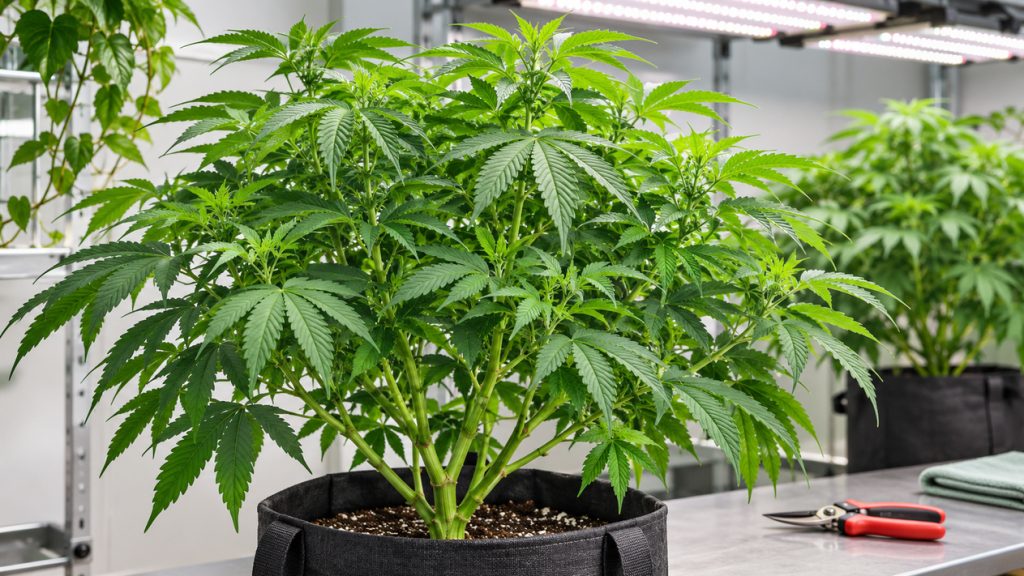
Preserving desirable cannabis genetics is an important part of cultivation, especially for growers who discover a plant with exceptional characteristics. Whether it’s a particular growth pattern, distinctive aroma, strong vigor, or other desirable traits, maintaining those genetics allows growers to return to a favorite cultivar without starting over from seed.
One of the most established ways to accomplish this is by maintaining a cannabis mother plant.
Mother plants serve as a reliable source of cuttings for cloning, allowing growers to reproduce selected genetics over multiple growing cycles. Unlike plants grown primarily for flowering and harvest, mother plants are maintained in vegetative growth for extended periods, sometimes months or even years.
However, keeping a mother plant healthy over the long term involves more than simply preventing it from flowering. Proper selection, environmental management, nutrition, pruning, pest prevention, and genetic preservation all play important roles.
In this guide, we’ll explore how to select a cannabis mother plant, maintain healthy vegetative growth, manage plant size, preserve valuable genetics, and recognize when it may be time to replace an aging mother.
What Is a Cannabis Mother Plant?
A cannabis mother plant is an established plant maintained primarily as a source of vegetative cuttings, commonly called clones.
Instead of allowing the plant to progress through a typical flowering cycle, growers maintain it in the vegetative stage, where it continues producing stems, leaves, and branches.
These branches can provide material for cannabis cloning, allowing new plants to be produced while preserving the genetic characteristics of the original plant.
Because clones are produced through asexual reproduction, they generally carry essentially the same genetic information as their mother plant.
This makes mother plants particularly valuable when maintaining cultivars with desirable characteristics.
How Mother Plants Differ From Flowering Plants
Most photoperiod-sensitive cannabis cultivars respond to changes in day length.
Long-day lighting conditions generally encourage vegetative development, while sufficiently long, uninterrupted dark periods promote the transition toward flowering.
Mother plants are maintained under conditions intended to support continued vegetative growth.
Their purpose is also different from that of a plant being grown primarily for harvest.
Rather than maximizing flower production, the goal is to maintain a healthy, manageable plant capable of producing suitable propagation material over time.
This difference influences how mother plants are maintained, pruned, and managed.
Why Keep Cannabis Mother Plants?
Mother plants provide several advantages, particularly for growers interested in genetic preservation and consistent propagation.
Preserving Favorite Genetics
One of the biggest advantages of maintaining a mother plant is the ability to preserve a selected cultivar.
Cannabis plants grown from seed can display considerable variation, even among seeds originating from the same breeding line.
Once a grower identifies an individual plant with desirable characteristics, cloning provides a way to maintain that particular genetic selection.
Rather than hoping to reproduce the same traits through another seed, growers can continue working with the established plant.
Greater Consistency Between Grows
Clones taken from the same mother plant generally share the same underlying genetics.
This can help reduce some of the variability associated with growing plants from seed.
More consistent genetics may make it easier to compare cultivation results and evaluate how different environmental conditions influence plant development.
However, genetic similarity does not guarantee identical performance. Nutrition, lighting, temperature, plant health, and other environmental factors can still produce noticeable differences.
A Continuing Source of Cuttings
A healthy mother plant can provide propagation material over multiple growing cycles.
For growers maintaining favorite cultivars, this reduces the need to repeatedly establish new plants from seed.
It also allows a selected genetic line to remain available for future propagation.
The Disadvantages of Maintaining Mother Plants
Although mother plants offer valuable benefits, they also require ongoing resources.
Maintaining a mother plant means dedicating space, lighting, growing media, and regular attention to a plant that is not being grown primarily for harvest.
Additional responsibilities include pruning, monitoring plant health, managing root development, and preventing pests and diseases.
For someone maintaining only a few plants, these commitments may outweigh the advantages.
The decision to keep mother plants ultimately depends on the value of the genetics being preserved and the resources available to maintain them.
Selecting the Right Genetics for a Mother Plant
Choosing which plant to preserve is one of the most important decisions in mother plant management.
Not every healthy cannabis plant necessarily deserves a permanent place in a genetic collection.
Ideally, a mother plant represents a carefully selected individual with characteristics worth maintaining.
Start With Healthy, Vigorous Plants
Plant health should be a primary consideration.
Potential mother plants should exhibit vigorous growth, healthy foliage, strong structural development, and no unexplained symptoms of disease.
Plants experiencing persistent stress or showing signs of poor health may produce less desirable propagation material.
However, appearance alone cannot confirm the absence of pathogens, particularly infections that may remain asymptomatic.
Evaluate Desirable Characteristics
Depending on the grower’s objectives, important selection characteristics may include:
- Overall vigor and growth consistency
- Branching structure and plant architecture
- Resistance or tolerance to environmental stress
- Root development and propagation performance
- Mature plant characteristics
- Desirable aroma and other cultivar-specific qualities
- Overall consistency and stability
Different growers will prioritize different characteristics.
For example, someone maintaining a compact genetic collection may value manageable growth and branching, while a breeder may prioritize particular inherited traits.
Understanding Phenotype Selection
Cannabis plants grown from seed may display different characteristics because each seed generally represents a genetically distinct individual.
The observable characteristics of a plant are known as its phenotype.
A phenotype results from interactions between the plant’s genetics and its environment.
The practice of evaluating multiple plants and selecting individuals with desirable characteristics is commonly called phenotype hunting, or phenohunting.
When a particularly desirable plant is identified, vegetative propagation can preserve that individual genetic selection.
Why Vegetative Appearance Isn’t Everything
An important consideration is that a plant’s appearance during vegetative growth does not necessarily reveal all of its mature characteristics.
A vigorous young plant may later display traits that differ from what the grower expected.
For this reason, selecting a valuable mother plant may involve evaluating mature plant characteristics before deciding which genetics deserve long-term preservation.
Some growers maintain clearly labeled backup clones of candidate plants while evaluating the originals.
Once a preferred selection has been identified, the corresponding preserved plant can become the foundation of a mother plant collection.
Good identification and recordkeeping are especially important during this process.
Establishing a Healthy Mother Plant
Once a suitable genetic selection has been made, the next consideration is establishing a healthy plant for long-term maintenance.
A mother plant can originate from a selected seed-grown plant or from a healthy clone.
Both approaches can preserve valuable genetics, provided the starting material is suitable.
Starting From a Selected Plant
A seed-grown plant may be selected after evaluating its characteristics.
Maintaining that selection through vegetative propagation allows the grower to preserve the chosen genotype rather than relying on another seed to reproduce it.
Starting From a Clone
An established clone can also become a mother plant.
This approach is common when genetics are obtained from an existing propagation line or when replacing an older mother.
However, a clone should not automatically be considered healthy simply because it develops roots and begins growing.
The health status of its source material remains important.
Establishing a Suitable Root System
A healthy root system is fundamental to long-term plant maintenance.
The growing container and medium should provide suitable moisture retention, drainage, and oxygen availability.
Root systems that remain excessively wet, poorly aerated, or severely restricted can contribute to declining plant health.
Because mother plants may remain in their containers much longer than plants being grown through a single production cycle, root-zone management deserves ongoing attention.
Quarantining Newly Introduced Plants
Bringing new genetics into an established collection also introduces potential plant health risks.
Newly acquired plants may carry pests or pathogens that are not immediately visible.
Keeping incoming plants separate while their condition is evaluated can help reduce the risk of introducing problems into an existing collection.
For valuable propagation stock, appropriate pathogen testing may provide information that visual inspection alone cannot.
Creating the Right Environment for Mother Plants
Mother plants depend on environmental conditions that support healthy, continued vegetative development.
Lighting, temperature, humidity, airflow, and available space all influence plant growth.
Unlike plants being prepared for a flowering cycle, mother plants may remain under vegetative conditions for extended periods.
This makes stability particularly important.
For a closer look at lighting, environmental conditions, and healthy vegetative development, explore our Cannabis Vegetative Stage Guide.
Lighting and Photoperiod
Most photoperiod-sensitive cannabis cultivars remain vegetative under sufficiently long daily light periods.
Indoor vegetative cultivation commonly uses approximately 16–18 hours of light per day, with 18 hours being a familiar approach. Cultivar responses can vary.
Maintaining a consistent photoperiod helps reduce unwanted developmental changes.
Lighting intensity matters as well.
Mother plants require enough light to support healthy vegetative growth, but excessive intensity can increase water demand, heat stress, and other environmental challenges.
The objective is sustainable plant maintenance rather than maximizing growth at every opportunity.
Temperature
Temperature influences photosynthesis, respiration, water uptake, and overall plant metabolism.
Extremely high or low temperatures can interfere with healthy development.
Stable conditions appropriate for vegetative growth are generally preferable to repeated temperature fluctuations.
Humidity and Airflow
Humidity influences transpiration, which is the process by which plants lose water through their leaves.
Very dry environments may increase water stress, while prolonged excessive humidity can contribute to conditions favorable for certain plant diseases.
Adequate airflow helps maintain a more consistent environment around the foliage.
However, strong, continuous air movement directly against the plants can also increase moisture stress.
Environmental Management at a Glance
| Factor | Main consideration |
|---|---|
| Photoperiod | Maintain consistent long-day conditions for photoperiod-sensitive cultivars |
| Light intensity | Support healthy vegetative development without unnecessary stress |
| Temperature | Avoid prolonged extremes and major fluctuations |
| Humidity | Balance transpiration needs with disease prevention |
| Airflow | Encourage consistent air movement without excessive drying |
| Growing space | Allow room for healthy branching, inspection, and maintenance |
| Root environment | Maintain suitable moisture, drainage, and oxygen availability |
There is no single environmental formula that is optimal for every mother plant.
Cultivar characteristics, growing media, plant size, and equipment all influence the appropriate approach.
Watering, Nutrition & Root-Zone Management
Long-term mother plant maintenance differs from caring for a plant that will soon complete its growing cycle.
Instead of preparing for flowering and harvest, the goal is to support continued vegetative health over an extended period.
This requires particular attention to watering, nutrition, and the root environment.
Watering Consistency
Water availability influences nearly every aspect of plant growth.
Repeated severe drying can stress roots and foliage, while persistent saturation may reduce oxygen availability around the roots.
The appropriate watering approach depends on plant size, container volume, growing medium, and environmental conditions.
Rather than following a rigid schedule regardless of plant condition, growers should understand how their particular medium retains and releases moisture.
Nutritional Requirements
Mother plants require essential nutrients to maintain healthy stems, leaves, and roots.
Nitrogen is particularly important for vegetative development, while phosphorus, potassium, calcium, magnesium, and other nutrients also support normal plant function.
However, more fertilizer does not automatically produce a healthier mother plant.
Excessive nutrient concentrations can create root-zone stress or contribute to nutritional imbalances.
Because mother plants remain in vegetative growth for extended periods, stable and appropriate nutrition is generally more useful than repeatedly pushing rapid growth.
Growing Media Considerations
Mother plants may be maintained in soil-based systems, coco coir, or hydroponic environments.
Each approach has different management requirements.
Soil-based media may provide buffering capacity and moisture retention, depending on their composition.
Coco coir requires attention to its particular water-holding characteristics and nutrient management.
Hydroponic systems can provide direct control over nutrient delivery but may require more frequent monitoring.
Regardless of the medium, healthy root development remains the priority.
Preventing Long-Term Root Problems
Mother plants can develop extensive root systems over time.
When roots outgrow their available space, the plant may become increasingly difficult to maintain.
Restricted root development can affect water availability, nutrient uptake, and overall vigor.
Repotting, replacing growing media, or renewing the plant from healthy propagation material may become appropriate depending on the condition of the plant.
Severe root disturbance, however, can also create stress and should not be treated as routine maintenance without a clear reason.
Pruning, Training & Managing Plant Structure
One of the most important differences between maintaining a mother plant and growing a plant for harvest is the objective of pruning and training.
For mother plants, the goal is to maintain a healthy, manageable structure capable of supporting continued vegetative development.
Why Pruning Matters
Without structural management, a mother plant may become excessively tall, uneven, or difficult to maintain.
Uncontrolled growth can make it harder to inspect foliage, manage available space, and access healthy propagation material.
Pruning also influences how the plant distributes growth among its branches.
However, removing too much healthy foliage or repeatedly stressing the plant can interfere with recovery and vigor.
A balanced approach is important.
Topping and Branch Development
Topping is a horticultural pruning technique involving the removal of an actively growing shoot tip.
Removing the dominant growing point changes the plant’s hormonal balance and can encourage the development of lateral branches.
This phenomenon is related to apical dominance, the tendency of an actively growing shoot tip to influence the growth of other shoots.
For mother plants, understanding apical dominance helps explain how pruning can influence overall structure.
Low-Stress Training
Low-stress training, commonly abbreviated LST, involves guiding plant growth through gentle adjustments to branch positioning.
Compared with techniques that remove substantial amounts of plant tissue, LST can influence plant structure while minimizing direct tissue damage.
It may be useful for managing plant shape and improving access to developing branches.
However, the amount of training appropriate for a mother plant depends on its size, condition, and maintenance objectives.
For a more detailed explanation of this technique, see our Low Stress Training for Cannabis Plants guide, which covers the fundamentals of shaping and managing plant growth.
Avoiding Excessive Stress
Mother plants need sufficient healthy foliage and recovery time to sustain long-term growth.
Repeated heavy pruning, mechanical damage, or inadequate recovery can reduce vigor.
The goal is not simply to maximize the number of branches.
It is to maintain a healthy plant capable of continued development without accumulating unnecessary stress.
Managing Mother Plant Size: Full-Size vs. Bonsai Mothers
Not every grower has the space to maintain large mother plants.
For smaller operations or growers preserving only a few favorite cultivars, compact mother plant management may offer an alternative.
One approach is commonly known as maintaining a bonsai mother plant.
What Is a Bonsai Cannabis Mother Plant?
A bonsai mother is a cannabis plant maintained in a deliberately compact form through container selection, pruning, and ongoing structural management.
Unlike decorative bonsai trees, the objective is generally not to create a miniature ornamental display.
Instead, the goal is to preserve living genetics while using relatively little space.
Benefits of Bonsai Mothers
Compact mother plants can offer several advantages:
- Reduced space requirements
- Lower overall maintenance demands in some setups
- Easier organization of small genetic collections
- Greater flexibility when preserving multiple cultivars
- Less unnecessary vegetative growth between propagation needs
For growers interested primarily in keeping genetics available rather than producing large quantities of cuttings, a smaller plant may be sufficient.
Limitations of Compact Mother Plants
Smaller plants also have limitations.
A compact canopy generally provides less available propagation material than a larger, more vigorous plant.
Small containers can also become difficult to manage as root systems develop.
Restricted root volume may increase sensitivity to watering and nutritional changes.
Additionally, frequent pruning and long-term confinement can create stress if plant health is not carefully maintained.
Choosing Between Full-Size and Bonsai Mothers
The better approach depends on the purpose of maintaining the plant.
| Consideration | Full-Size Mother | Bonsai Mother |
|---|---|---|
| Space requirements | Generally higher | Generally lower |
| Cutting production potential | Typically greater | Typically more limited |
| Plant size management | More room for natural growth | Requires regular size control |
| Root-zone management | May allow greater root volume | Smaller volumes require closer attention |
| Best suited for | Frequent propagation | Compact genetic preservation |
Neither approach is universally superior.
A large mother plant may be appropriate when many cuttings are required, while a compact mother may be more practical when preserving genetics is the primary objective.
The most important consideration is maintaining long-term plant health regardless of size.
Keeping Mother Plants Healthy: Pests, Diseases & HLVd
Mother plants can remain in cultivation much longer than many other cannabis plants.
This extended lifespan creates additional opportunities for pests, pathogens, and environmental problems to develop.
It also makes plant health particularly important because problems affecting a mother plant may spread into future generations of clones.
Routine Plant Inspection
Regular observation can help identify problems before they become severe.
Important areas to monitor include:
- Leaf discoloration or unusual patterns
- Unexpected changes in growth rate
- Damaged or distorted foliage
- Visible insects or pest activity
- Abnormal stem development
- Root-zone deterioration
- Unexplained reductions in plant vigor
Changes should be evaluated in context rather than immediately attributed to one specific cause.
For example, yellowing leaves may result from nutrient issues, root stress, environmental conditions, or disease.
Preventing Pest Problems
Mother plants can host many of the same pests encountered during other stages of cultivation.
Depending on the growing environment, these may include spider mites, thrips, aphids, fungus gnats, and other common horticultural pests.
Integrated pest management, or IPM, emphasizes prevention, monitoring, sanitation, and the appropriate use of control methods.
For long-term mother plant collections, preventing pest establishment is particularly valuable.
Understanding Hop Latent Viroid
One of the most important plant health concerns in modern cannabis propagation is Hop Latent Viroid (HLVd).
HLVd is a small infectious RNA molecule that can affect cannabis plants.
Infected plants may exhibit symptoms such as reduced vigor, abnormal growth, or diminished performance.
However, some infected plants remain asymptomatic, meaning they show few or no obvious signs of infection.
This makes HLVd especially challenging for growers maintaining mother plants.
Research has demonstrated that the viroid can spread through vegetative propagation when cuttings are taken from infected donor plants.
It may also spread through contaminated plant sap, tools, and certain shared propagation or irrigation environments.
Why Visual Inspection Isn’t Enough
A mother plant may appear healthy while carrying HLVd.
Consequently, the absence of visible symptoms does not prove that a plant is free from infection.
Appropriate laboratory testing can be important when verifying the health of valuable propagation stock.
Testing is particularly relevant for growers maintaining large genetic collections or repeatedly distributing cuttings from the same source plants.
Sanitation and Disease Prevention
Maintaining clean tools, containers, work surfaces, and growing environments can help reduce opportunities for pathogen transmission.
Avoiding unnecessary movement of plant material between growing areas may also help limit the spread of certain problems.
New plants should be evaluated before being introduced into an established collection.
A healthy mother plant program begins with suitable starting material and continues through consistent monitoring and sanitation.
Managing Multiple Mother Plants & Keeping Records
As a genetic collection grows, organization becomes increasingly important.
Two young cannabis plants may appear nearly identical while representing entirely different cultivars or selections.
Without accurate identification, valuable genetics can easily become confused.
Labeling Cultivars and Selections
Each mother plant should have a clear and consistent identifier.
Useful information may include the cultivar name, individual selection number, source, and date of establishment.
For example, a grower evaluating several seed-grown plants from the same cultivar may identify them as Selection A, Selection B, and Selection C.
These identifiers help distinguish individual genotypes that might otherwise share the same cultivar name.
Tracking Plant Lineage
Lineage records document where propagation material originated.
For example, if a mother plant is replaced by one of its rooted cuttings, the replacement can be recorded as a continuation of that particular genetic line.
This becomes especially useful when maintaining several generations of propagation stock.
Maintaining Health Records
Useful information to document includes:
- Plant identification and source
- Date established
- Growing medium and container changes
- Significant pruning or maintenance
- Pest and disease observations
- Laboratory testing results, when available
- Changes in vigor or growth characteristics
- Replacement history
Recordkeeping does not need to be complicated.
A simple, consistent system is often more valuable than an elaborate one that is rarely updated.
Over time, these records can help identify recurring problems and support better decisions about genetic preservation.
How Long Can a Cannabis Mother Plant Live?
One of the most interesting questions about mother plants is how long they can remain healthy and productive.
Unlike plants that complete a flowering cycle and naturally senesce, photoperiod-sensitive cannabis plants can be maintained under vegetative conditions for extended periods.
In managed environments, some mother plants are maintained for months or even years.
However, there is no universal lifespan or replacement schedule that applies to every cannabis mother plant.
What Determines Mother Plant Longevity?
Several factors influence how long a mother plant can remain productive.
These include genetics, root health, environmental stability, nutrition, pest pressure, disease status, and ongoing maintenance.
A well-maintained plant may remain vigorous for a considerable period.
Conversely, plants experiencing repeated stress or accumulating health problems may decline much sooner.
Does an Older Mother Plant Automatically Become Weaker?
Not necessarily.
Age alone does not establish whether a mother plant is suitable for continued propagation.
An older plant may remain healthy, while a much younger plant may perform poorly because of disease, environmental stress, or root problems.
However, maintaining the same plant for extended periods can increase the opportunities for health problems to accumulate.
This is one reason some propagation operations periodically renew their mother plants.
Replacing an Aging Mother Plant
One approach to maintaining a genetic line is to establish a replacement mother from a healthy cutting.
The replacement carries essentially the same genetics while allowing the grower to begin with a newly established root system and plant structure.
However, replacement is not automatically a complete reset.
If the original mother carries a systemic pathogen such as HLVd, a cutting taken from that plant may carry the same infection.
Similarly, propagation cannot guarantee the elimination of every genetic or physiological issue.
The decision to replace a mother should therefore consider plant health, propagation performance, root condition, and the reliability of the source material.
Do Mother Plants and Clones Lose Genetic Quality Over Time?
A common claim in cannabis cultivation is that cloning a clone repeatedly will eventually weaken the genetics.
Sometimes described as clonal degradation, this idea suggests that successive generations of vegetative propagation inevitably produce inferior plants.
The reality is more complicated.
Genetic Stability and Cloning
Traditional cloning generally preserves the genetic information of the donor plant.
A clone does not automatically become genetically inferior simply because its donor plant was also a clone.
However, biological systems are not perfectly static.
Plants can accumulate genetic changes during growth and development, and different tissues within the same plant may occasionally develop distinct mutations.
Understanding Somatic Mutations
A somatic mutation is a genetic change that occurs in a non-reproductive cell during an organism’s development.
In plants, some somatic mutations may persist within a particular branch or region of tissue.
If propagation material contains those altered cells, certain genetic changes may be carried into subsequent plants.
A published cannabis study examining different regions of a single plant identified substantial variation among tissue samples.
The researchers described this as genetic mosaicism, meaning genetically distinct cell populations can exist within the same plant.
This finding demonstrates that cannabis plants can accumulate genetic variation during development.
However, the study did not establish that every cloning generation becomes progressively weaker or that all such changes reduce plant quality.
Is Genetic Drift the Right Explanation?
The term genetic drift is sometimes used casually when discussing changes in cloned plants.
In population genetics, however, genetic drift has a more specific meaning involving changes in allele frequencies within populations.
For individual clonal plants, somatic mutation, disease, physiological changes, and environmental influences are often more relevant concepts.
Keeping these distinctions clear helps avoid confusion.
Plant Health Can Mimic Genetic Decline
A grower may notice that clones from a long-maintained line appear less vigorous than earlier generations.
It is tempting to assume that the genetics have deteriorated.
But several other explanations are possible.
Systemic pathogens, root-zone problems, nutritional imbalances, repeated stress, and changing environmental conditions can all affect plant performance.
These issues may create the appearance of genetic decline even when no meaningful harmful genetic mutation has occurred.
What About Tissue Culture?
Tissue culture offers additional options for preserving and propagating selected genetics.
Certain specialized tissue culture techniques can also be used in pathogen elimination programs.
However, tissue culture does not automatically guarantee genetic stability.
Some culture methods, particularly those involving repeated regeneration or prolonged subculturing, can introduce genetic or epigenetic changes.
For this reason, reliable genetic preservation requires attention to both propagation methods and the health and identity of the material being maintained.
The important takeaway is that successive cloning does not inevitably mean genetic deterioration. Maintaining healthy, accurately identified propagation stock is more useful than assuming a genetic line becomes weaker simply because it has been cloned repeatedly.
Common Mother Plant Problems & Troubleshooting
Even carefully maintained mother plants can develop problems.
Recognizing changes early can help prevent minor issues from becoming long-term setbacks.
| Problem | Possible contributing factors | What to evaluate |
|---|---|---|
| Yellowing leaves | Nutritional imbalance, root stress, aging foliage, disease | Leaf pattern, nutrition, and root conditions |
| Slow growth | Environmental stress, limited root volume, plant health issues | Temperature, lighting, roots, and recent changes |
| Excessive height | Growth habit, insufficient structural management | Available space and plant architecture |
| Weak branching | Genetics, environmental conditions, repeated stress | Plant vigor, light distribution, and pruning history |
| Wilting | Water stress, root damage, impaired uptake | Moisture conditions and root health |
| Poor cutting quality | Donor stress, disease, declining vigor | Overall health of the mother plant |
| Repeated pest outbreaks | Inadequate sanitation, incoming infestations | Inspection and integrated pest management practices |
| Declining long-term vigor | Root restrictions, accumulated stress, pathogens | Plant history, root condition, and disease testing |
Yellowing Leaves
Yellowing can occur for several reasons.
Older leaves naturally age, but widespread or unusual yellowing may indicate nutritional, environmental, or root-related problems.
The location and progression of discoloration can provide useful clues.
Excessive Growth
Mother plants can become difficult to manage when their structure exceeds the available space.
Large, crowded plants may become harder to inspect and maintain.
Ongoing structural management can help keep plants accessible, but excessive pruning may also interfere with healthy growth.
Declining Vigor
A gradual reduction in growth or recovery after maintenance may indicate underlying stress.
Root restriction, nutritional problems, pests, pathogens, and environmental changes are all possible contributing factors.
Plant age alone should not be assumed to be the explanation.
Poor-Quality Cuttings
When propagation material repeatedly performs poorly, the condition of the mother plant deserves attention.
A donor plant may be experiencing stress or carrying a pathogen that affects rooting performance.
Repeated failures should prompt evaluation of both the propagation process and the health of the source plant.
Mother Plants, Traditional Cloning & Tissue Culture
Mother plants are closely connected to the broader subject of cannabis propagation.
Traditional cloning and tissue culture both provide ways to reproduce selected genetics, but they differ in their equipment requirements, techniques, and applications.
Traditional Cloning
Traditional cloning uses stem cuttings to produce new plants.
Mother plants are commonly maintained as the source of this material.
This approach is relatively accessible and widely used in horticulture.
However, the quality and health of the donor plant remain important because propagation may carry certain existing problems into the next generation.
Tissue Culture
Tissue culture involves growing small pieces of plant material in sterile, carefully controlled conditions.
It can provide options for micropropagation, genetic preservation, and specialized plant health programs.
Some tissue culture systems may also reduce the amount of space required to maintain genetic collections.
Nevertheless, the equipment, sterile procedures, technical knowledge, and ongoing maintenance involved can be considerably different from traditional cloning.
To learn more about this advanced propagation method, explore our Cannabis Tissue Culture Guide, including its applications in genetic preservation, plant health, and micropropagation.
Which Approach Is Better?
The best approach depends on the grower’s needs.
Traditional mother plants and stem cuttings may be appropriate for straightforward propagation and preserving a limited number of cultivars.
Tissue culture may provide additional options for organizations managing extensive genetic collections or specialized propagation programs.
These methods are not necessarily competitors.
They can serve complementary roles within a broader genetic preservation strategy.
Frequently Asked Questions About Cannabis Mother Plants
How long can a cannabis mother plant be kept alive?
Photoperiod-sensitive cannabis mother plants can be maintained in vegetative growth for extended periods, potentially months or years under suitable conditions.
There is no universally established maximum lifespan. Continued health and productivity are more useful considerations than age alone.
Can a clone become a mother plant?
Yes.
A healthy, established clone can become a mother plant and serve as a source of additional cuttings.
The clone retains essentially the same genetics as its donor, although maintaining a healthy propagation line remains important.
Do mother plants need to flower?
No.
The purpose of a conventional cannabis mother plant is to remain available for vegetative propagation.
Flowering is not required for maintaining a mother, although evaluating mature flowering characteristics may help growers select which genetics they want to preserve.
Can a mother plant be maintained in a small space?
Yes.
Compact or bonsai-style mother plants can provide a way to maintain living genetics in limited space.
However, smaller containers and restricted plant size may require closer attention to root health, moisture management, and structural maintenance.
Do mother plants eventually lose their genetics?
Not simply because they get older.
Clonal lines can remain genetically stable, although somatic mutations and other biological changes are possible.
Apparent declines in performance may also result from pathogens, stress, or environmental problems rather than genetic deterioration.
How many mother plants should a grower maintain?
There is no universal number.
The appropriate size of a mother plant collection depends on the number of genetics being preserved, available space, maintenance resources, and propagation requirements.
Maintaining fewer healthy, well-documented plants may be more valuable than managing a larger collection that receives inadequate attention.
Can mother plants carry HLVd without showing symptoms?
Yes.
Research has documented asymptomatic HLVd infections in cannabis stock plants.
Because visual appearance alone cannot reliably confirm the absence of infection, appropriate testing can be important when maintaining valuable propagation genetics.
When should a mother plant be replaced?
Replacement may be considered when a plant becomes difficult to maintain, develops persistent root problems, exhibits declining vigor, or no longer meets propagation requirements.
However, simply replacing an older mother with a clone does not automatically eliminate systemic pathogens.
The health of the replacement material remains important.
Final Thoughts
Cannabis mother plants play an important role in preserving desirable genetics and supporting consistent vegetative propagation.
For growers who discover a cultivar worth keeping, a healthy mother plant provides a way to maintain that selection across multiple growing cycles without repeatedly starting from seed.
However, successful long-term maintenance requires more than simply keeping a plant in vegetative growth.
Thoughtful genetic selection, stable environmental conditions, appropriate nutrition, healthy root systems, structural management, and careful monitoring all contribute to continued plant health.
The importance of disease prevention should not be overlooked, particularly when working with pathogens such as Hop Latent Viroid that can spread through vegetative propagation.
It is also worth remembering that mother plant longevity and genetic stability are more complicated than many common assumptions suggest. Older plants are not automatically inferior, and repeated cloning does not inevitably result in weaker genetics.
Whether maintaining a single compact mother plant or managing a larger genetic collection, the objective remains the same: preserving healthy, identifiable genetics that can continue to be propagated reliably over time.
Understanding these principles provides a valuable foundation for anyone interested in cannabis cloning, genetic preservation, and the long-term management of cultivation stock.
Educational note: Cannabis cultivation and propagation laws vary by jurisdiction. Readers should ensure any cultivation or propagation activities comply with applicable local, state, and federal requirements.