
Low Stress Training (LST) for Cannabis Plants: A Complete Guide
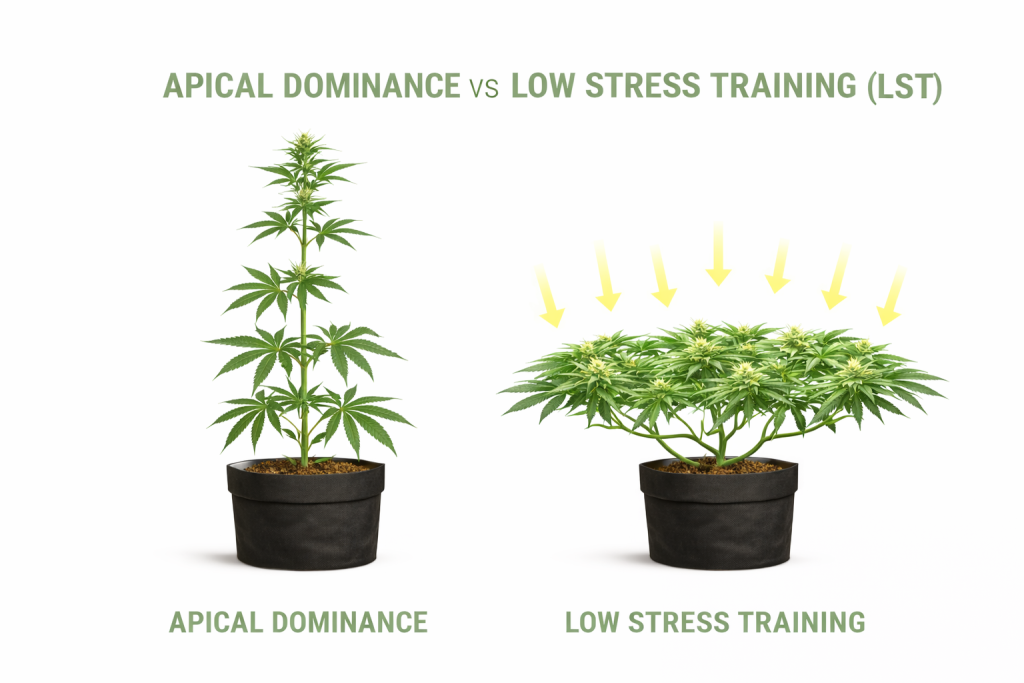
Low stress training (LST) is one of the most effective techniques for shaping cannabis plants and improving overall canopy structure. By gently guiding growth instead of allowing plants to grow vertically, LST helps maximize light exposure, improve airflow, and create a more balanced plant.
Whether growing in a controlled indoor setup or outdoors, LST is a simple method that can significantly improve plant development when applied correctly.
What Is Low Stress Training (LST)?
Low stress training is a plant training technique that involves bending and securing branches to control the direction of growth. Unlike high-stress methods such as topping or pruning, LST minimizes shock to the plant while encouraging multiple growth points to develop evenly.
Instead of one dominant main stem, the plant is trained to grow outward, allowing more of the canopy to receive consistent light.
Why Use LST for Cannabis Plants?
Cannabis plants naturally grow in a way that prioritizes a central main stem. While this works in natural environments, it can limit efficiency in controlled growing setups.
LST helps:
- Improve light distribution across the canopy
- Encourage multiple bud sites to develop evenly
- Increase airflow between branches
- Maximize use of available grow space
- Support a more controlled and manageable plant structure
When done properly, LST can create a flatter, more uniform canopy that allows light to reach more areas of the plant.
When to Start Low Stress Training
The best time to begin LST is during the early vegetative stage, when stems are still flexible and easy to manipulate.
Starting early allows you to:
- guide growth gradually
- reduce the risk of snapping stems
- build structure as the plant develops
As the plant matures, adjustments can be made to maintain balance and spacing throughout the canopy.
Tools for Low Stress Training
Having the right tools makes LST easier and more consistent over time.
Common tools include:
- Soft plant training ties – gentle, flexible, and easy to adjust
- Plant training clips – help guide branch direction without tying
- Fabric pots or containers – provide anchor points for securing branches
- Trellis netting (optional) – can be used later to help support and maintain an even canopy
Using soft, flexible materials is important to prevent damage while the plant continues to grow.
Step-by-Step LST Guide for Cannabis
1. Identify the main stem
Locate the tallest, most dominant growth point.
2. Gently bend the stem outward
Carefully guide the main stem away from the center of the plant. Move slowly to avoid stress or breakage.
3. Secure the position
Use a soft tie or clip to hold the stem in place.
4. Spread out new growth
As additional branches develop, continue guiding them outward to create an even canopy.
5. Maintain and adjust
Check the plant regularly and adjust ties as needed to keep growth balanced and open.
LST vs Other Training Techniques
Low stress training is often used alongside or instead of other methods.
- LST – gentle, continuous shaping with minimal stress
- Topping – cutting the main stem to create multiple growth points
- SCROG (Screen of Green) – using a net to control canopy spread
LST can be used on its own or combined with other techniques depending on the desired plant structure.
Common Mistakes to Avoid
- Bending too aggressively – always guide slowly
- Using harsh or rigid materials – can damage stems
- Not adjusting ties regularly – plants grow quickly
- Allowing overcrowding – reduces airflow and light penetration
Consistency is key when training plants effectively.
Final Thoughts
Low stress training is a simple but powerful technique for shaping cannabis plants and improving overall canopy efficiency. With minimal tools and regular adjustments, it’s possible to create a balanced structure that supports healthy, consistent growth.
Explore Ganja Paradise Grow Essentials
Explore our LST Plant Training Clips, Soft Plant Training Ties, and Home Grow Training Kit designed to support plant training and structured growth.
Continue The Growing Series
- Cannabis Seedling Guide
- Cannabis Vegetative Guide
- Cannabis Flowering Guide
- Harvest, Drying & Curing Guide
For a simplified, general approach to plant training techniques and tools, see our guide on Nice Stash™.