Cannabis Vegetative Stage Guide: How to Grow Healthy Plants
(Ganja Paradise Growing Series)
Build strong roots, lush growth, and set the stage for big yields.
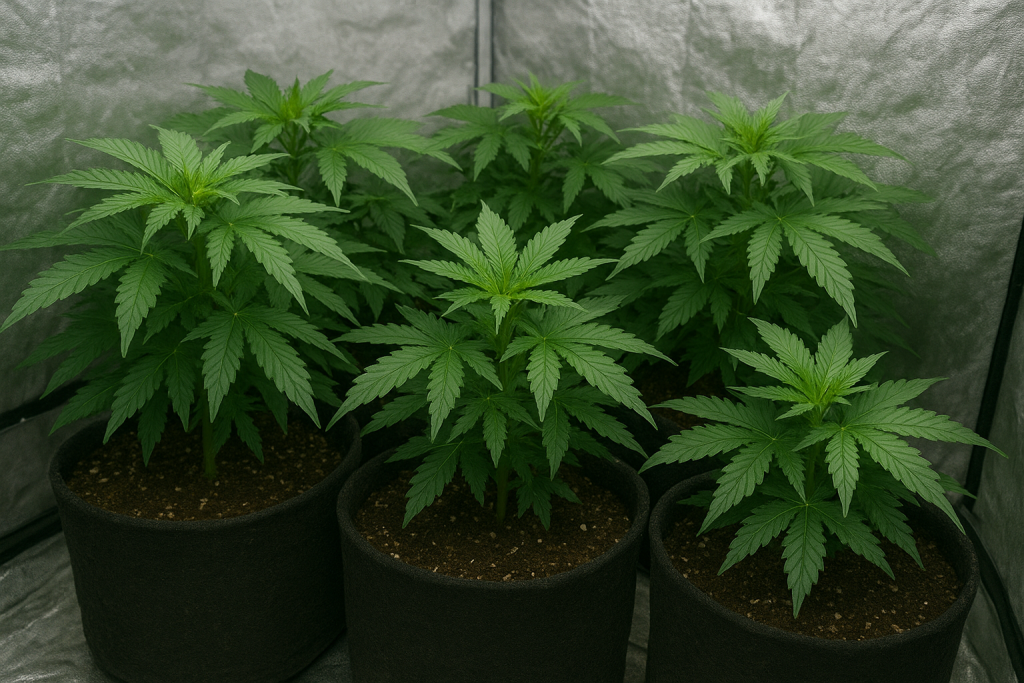
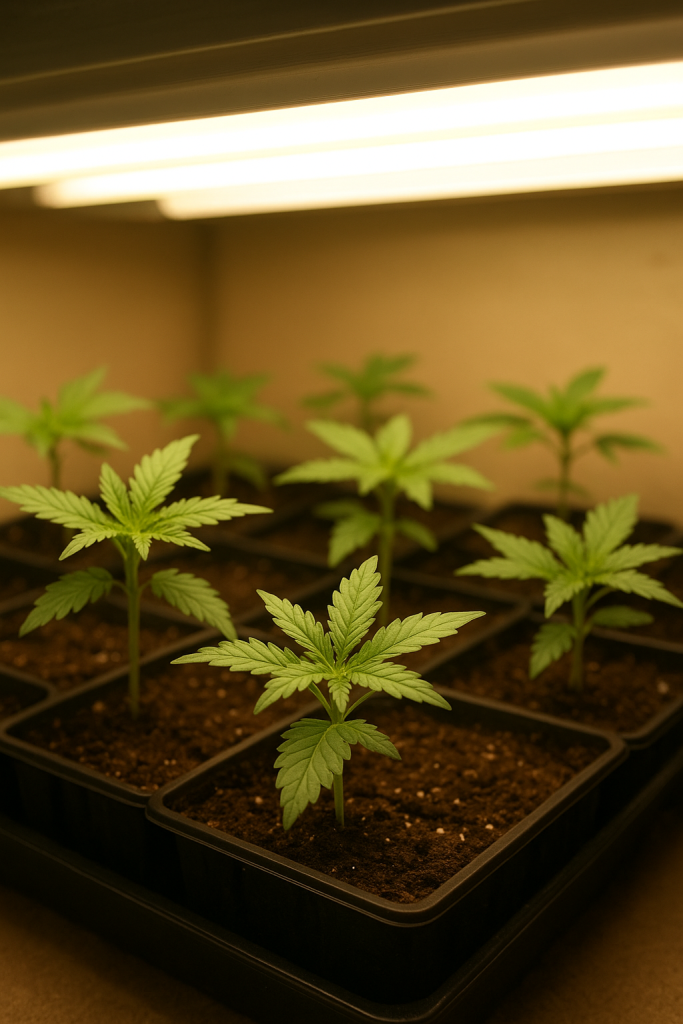
The vegetative stage is where your cannabis plant really comes alive. Once seedlings establish a strong root system, they shift gears into vigorous leafy growth, building the framework for the heavy yields to come. Whether you’re growing a few plants at home or managing a larger setup, understanding how to optimize this phase is the foundation of successful cultivation.
How Long Does the Vegetative Stage Last?
The length of veg depends on genetics and grower goals:
- Photoperiod strains can stay in veg as long as you keep them under 18+ hours of light. This flexibility lets growers train plants, build size, or maintain mothers indefinitely.
- Autoflowers, by contrast, have a built-in timer. Their vegetative period is short (often 2–4 weeks) before they transition to flower, regardless of light schedule.
- Typically, most home growers veg for 3–8 weeks, though some let plants veg for 12+ weeks.
Lighting During the Vegetative Stage
Light is the engine of plant growth. During veg:
- Spectrum: Blue-rich light (≈ 440–470 nm) promotes compact, bushy plants with tight internodes. Most modern full-spectrum LEDs provide a balanced mix of blue, red, and green, making them ideal for veg. Blue drives structure, while a touch of green improves canopy penetration and red supports photosynthesis. Fixtures can be dimmed or raised to fine-tune intensity.
- Intensity: Target ~300–500 μmol/m²/s PPFD across the canopy (some push to ~600). Use a PAR meter or your light manufacturer’s guidelines when adjusting height or dimming.
- Photoperiod: Standard schedules are 18/6 (18 hours on, 6 off) or 20/4. More than 18 hours provides minimal extra benefit.
💡 Tip: Track your Daily Light Integral (DLI)—the total photons delivered per day. Balancing intensity and duration ensures plants get enough light for explosive growth without light stress.
Environmental Targets (Temp, Humidity, VPD)
Cannabis thrives when the environment matches its growth stage:
- Temperature: Aim for 70–85°F (21–29°C) during the day, with only a slight drop at night.
- Humidity: Veg prefers 40–60% RH, slightly higher than in flower.
- VPD: Shoot for ~0.8–1.2 kPa. Use leaf temperature (often cooler under LEDs) to calculate accurately.
Watering & Nutrients in Veg
- pH: Keep soil between 6.0–7.0; coco/hydro 5.8–6.2 for optimal nutrient uptake.
- EC / Strength: Start around 0.8 EC for young plants, gradually building to ~1.6 EC as growth accelerates. Watch for tip burn (too strong) or pale leaves (too weak).
- Watering: Allow the top inch of soil (or medium) to dry slightly before watering again. Overwatering is the #1 common mistake. Watch leaves for drooping (overwatering) or curling (underwatering). Adjust volume, and frequency as plants grow.
- Runoff: Regularly check the pH and EC of runoff water to catch early signs of salt buildup or nutrient lockout, and to ensure the root zone stays balanced.
Cannabis requires a higher ratio of nitrogen (N) during veg, as it drives chlorophyll production and leafy green growth. However, phosphorus (P) and potassium (K) are still essential, though in lower amounts than during flower:
- Nitrogen (N): Primary driver of foliage, stems, and overall vigor.
- Phosphorus (P): Needed for root development, energy transfer, and preparing the plant for flowering.
- Potassium (K): Supports strong stems, water regulation, and overall plant health.
Look for nutrient formulations labeled “Grow” or “Vegetative”, which usually follow an NPK ratio along the lines of 3-1-2 or 4-2-3. Supplement with calcium, magnesium, and micronutrients as needed. Always follow a light-to-stronger feeding approach, letting the plant’s leaf color, posture, and growth rate guide you.
Transplanting for Success
Healthy roots = healthy shoots.
- Transplant once roots begin circling or growth stalls.
- Move plants up in pot size gradually (solo cup → 1 gal → 3 gal → final container).
- Avoid soils that are too rich in nutrients (“hot” soils) when transplanting — seedlings and young veg plants burn easily.
Handle roots gently, water immediately after transplanting, and expect a short adjustment period before growth resumes.
Training & Shaping the Canopy
Veg is the time to shape plants for light efficiency and maximum yield. Here’s a comparison of popular methods:
- Topping / FIM: Cut above a node once the plant is established (4–6 nodes) to split growth into multiple tops.
- Low-Stress Training (LST): Bend and tie branches to create an even canopy with little stress.
- Supercropping: Pinch/bend thicker branches to redirect energy and improve airflow.
- ScrOG (Screen of Green): Stretch branches under a screen to maximize canopy area.
- SOG (Sea of Green): Grow many small plants with minimal veg, harvesting mainly colas.
Choose the method that fits your plant count, grow space, and legal environment.
Pre-Flower Sexing: Removing Males Early
If you’re growing from regular (non-feminized) seeds, the vegetative stage is also the time to check the sex.
- When to start checking: Around week 4–6 of veg, or once plants develop 5–7 nodes, they may begin to show pre-flowers.
- Look at the nodes where branches meet the main stem.
- Females show white pistils (hairs).
- Males develop pollen sacs (balls).
Cull males immediately unless breeding — this prevents accidental pollination and ensures your energy goes into growing resinous buds.
Pest Prevention & IPM in The Vegetative Stage
Veg is the easiest time to stop pests before flowering:
- Quarantine new clones before introducing them.
- Use sticky traps to monitor fungus gnats, thrips, or mites.
- Inspect the underside of leaves weekly.
- Thin foliage to improve airflow and reduce humidity pockets.
- Avoid spraying strong treatments once in flower — deal with pests early.
A clean veg room sets you up for a clean flower cycle.
Advanced: CO₂ Enrichment
CO₂ can accelerate veg growth, but only if:
- Your light is intense enough (>600 PPFD).
- Temperature, RH, and nutrients are dialed in.
Without those, CO₂ is wasted. For most small home grows, focus on basics before adding enrichment.
Preparing for Flower
As the vegetative stage wraps up, your plants should have:
- A strong root system in their final pots.
- An even canopy shaped by training.
- No signs of pests or deficiencies.
At this point, they’re ready for the “flip” to 12/12 light to initiate flowering.
Key Takeaways
- Veg lasts 3–16 weeks, depending on strain and grower goals.
- Optimize light, environment, watering and nutrients for explosive leafy growth.
- Train plants now for an even, productive canopy.
- Check sex by week 4–6 of veg to remove males early.
- Build strong habits in veg — it pays off with dense, frosty buds later.