
How to Clone Cannabis Plants: A Complete Guide to Successful Cloning
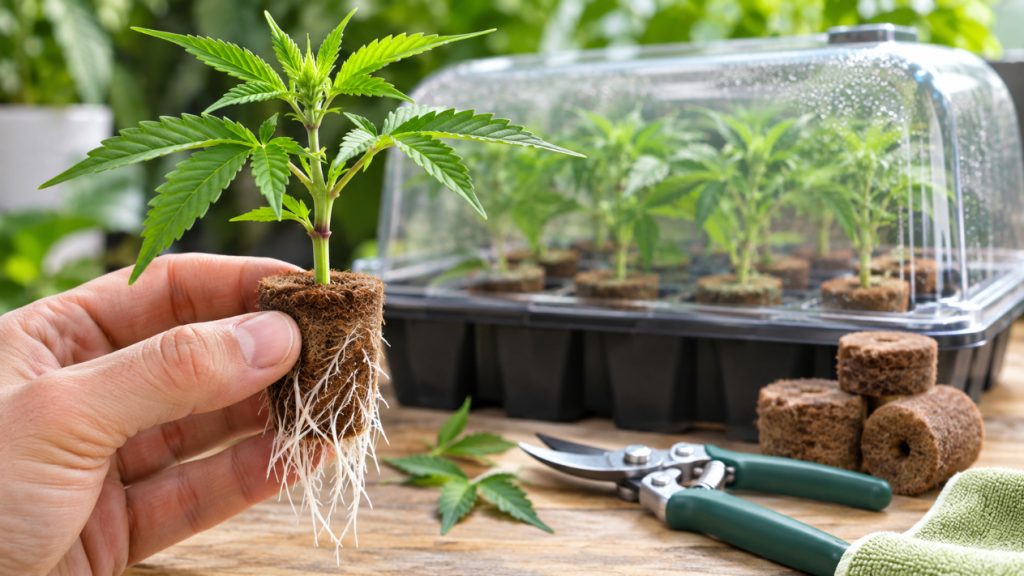
Cloning is one of the most widely used propagation methods in cannabis cultivation. Rather than starting every plant from seed, growers can produce new plants from cuttings taken from an existing plant, preserving desirable genetics and creating greater consistency between successive grows.
For growers who discover a particularly impressive cultivar, cloning offers a way to maintain those characteristics without relying on seeds to reproduce them. It is also widely used in commercial horticulture, where uniformity, predictable growth, and efficient propagation are important.
But successful cloning involves more than simply removing a branch and waiting for roots to appear. The health of the mother plant, the condition of the cutting, the rooting environment, and the propagation method all influence the outcome.
In this guide, we’ll explore how cannabis cloning works, the equipment and techniques involved, what happens during root development, and the common challenges growers should understand.
What Is Cannabis Cloning?
Cannabis cloning is a form of asexual plant propagation, meaning new plants are produced from existing plant material rather than through seed formation.
A clone begins as a cutting taken from a donor plant, commonly called a mother plant. Under suitable conditions, the cutting can develop its own root system and become an independent plant.
Unlike seeds, which ordinarily combine genetic material from two parents, clones carry essentially the same genetic information as the plant from which they originated.
This genetic continuity is one of cloning’s greatest advantages.
For example, if a grower discovers a cultivar with particularly desirable characteristics, cloning can help preserve those genetics for future cultivation.
However, genetic similarity does not guarantee identical results. Environmental conditions, nutrition, plant health, and other factors influence how genetic traits are expressed.
Two genetically identical plants may grow differently when exposed to different environments.
The Science Behind Root Development
One of the most interesting aspects of cloning is how a stem cutting can develop roots even though it originally had none.
These newly formed roots are called adventitious roots.
Unlike roots that develop from an existing root system, adventitious roots arise from other plant tissues, including stems.
Their formation involves a complicated interaction between plant hormones, cellular activity, energy reserves, and environmental conditions.
A particularly important group of hormones involved in this process is known as auxins.
Auxins help regulate plant growth and development, including the formation of adventitious roots. Some commercial rooting products contain synthetic auxins intended to support root initiation.
The effectiveness of these products can vary depending on the plant variety, formulation, and propagation conditions.
Understanding this process helps explain why a healthy cutting may eventually establish an entirely new root system.
Why Do Growers Clone Cannabis Plants?
Cannabis growers use cloning for several reasons, but genetic preservation is often the most important.
Preserving Desirable Genetics
When growing from seed, individual plants can express different characteristics, even when they come from the same breeding line.
Some may grow taller, develop different branching patterns, or display variations in other traits.
Cloning allows growers to preserve a selected plant’s genetic characteristics without producing a new generation through sexual reproduction.
This is particularly valuable when maintaining cultivars that are difficult to reproduce consistently from seed.
Greater Consistency
Clones originating from the same healthy mother plant are genetically very similar.
This can help reduce some of the variability associated with growing multiple plants from seed.
More consistent plants may also make it easier to compare cultivation results and evaluate environmental influences.
Nevertheless, uniform genetics do not eliminate differences caused by growing conditions.
Maintaining Favorite Cultivars
Cloning also allows growers to maintain a favored cultivar across multiple generations of plants.
Rather than searching for similar characteristics in new seedlings, they can continue propagating an established genetic line.
This is one reason mother plants are so important in horticultural propagation programs.
Potential Limitations
Cloning also has disadvantages.
Because clones originate from existing plants, they do not introduce the genetic diversity associated with conventional breeding.
They may also inherit or acquire problems present in the original plant, including certain systemic pathogens.
Maintaining mother plants requires space, ongoing care, and attention to plant health.
For these reasons, cloning should be viewed as one useful propagation method rather than a complete replacement for growing from seed.
Understanding the Role of the Mother Plant
The quality of a clone begins with the plant providing the cutting.
A mother plant is an established plant maintained primarily as a source of vegetative material for propagation.
Healthy mother plants generally produce healthier starting material, making donor selection an important part of any cloning program.
What Makes a Good Mother Plant?
Important characteristics include:
- Vigorous, consistent growth
- Healthy foliage and stems
- Desirable genetic traits
- Freedom from visible pest damage
- No unexplained signs of disease or decline
- A stable, well-maintained growing environment
However, appearances alone cannot establish whether a plant is free from every pathogen.
This distinction has become particularly important in cannabis cultivation because of diseases such as Hop Latent Viroid.
Why Plant Health Matters
Hop Latent Viroid, commonly abbreviated HLVd, is a small infectious RNA molecule capable of affecting cannabis plants.
Infected plants may exhibit reduced vigor, stunted growth, abnormal development, or other symptoms. Some infected plants may also appear relatively normal.
Research has demonstrated that HLVd can pass from infected stock plants into vegetative cuttings.
Consequently, cloning an apparently healthy plant does not automatically guarantee that the resulting plants will be pathogen-free.
Clean propagation practices, appropriate sanitation, and pathogen testing when warranted are important considerations, particularly in larger collections.
For a deeper understanding of selecting, maintaining, and managing healthy donor plants, explore our Cannabis Mother Plants Guide. The health and quality of the mother plant directly influence the propagation process.
Equipment and Supplies Used for Cannabis Cloning
Traditional cloning generally requires less specialized equipment than tissue culture, although the exact setup depends on the propagation method.
Common supplies include:
- Cutting tools: Clean, sharp pruning shears or propagation blades
- Propagation containers: Trays or small containers designed to support developing plants
- Rooting media: Materials such as rockwool, propagation plugs, or suitable soilless substrates
- Rooting products: Optional formulations containing plant growth regulators
- Humidity control: Propagation covers or other systems for managing moisture loss
- Lighting: Equipment capable of providing an appropriate environment for young plants
- Plant labels: Useful for identifying cultivars and recording propagation dates
- Sanitation supplies: Materials for cleaning work surfaces and reusable equipment
More advanced operations may also use automated misting, environmental monitoring, or specialized aeroponic propagation systems.
However, greater complexity does not automatically guarantee better results.
The quality of the starting material and the suitability of the propagation environment remain important regardless of the equipment used.
Choosing a Rooting Medium
One of the first decisions in plant propagation is selecting a medium that can support a developing root system.
A suitable rooting environment must provide an appropriate balance of moisture and oxygen while physically supporting the plant material.
Different media achieve this balance in different ways.
Rockwool
Rockwool is a manufactured mineral-fiber substrate commonly used in hydroponics and commercial plant propagation.
Its structure can retain moisture while maintaining air spaces around developing roots.
Rockwool is widely used because of its consistency, but its moisture characteristics and preparation requirements must be understood.
Peat-Based Propagation Plugs
Peat-based plugs are another common option.
They are convenient, relatively compact, and often used in propagation trays.
The characteristics of these products vary depending on their composition and manufacturing process.
Coco Coir
Coco coir is a growing medium derived from coconut husks.
It is valued in horticulture for its moisture retention, structure, and suitability for many container-growing applications.
Some propagation systems use coco-based plugs or blends, although their characteristics can differ from loose coco coir used in larger containers.
The goal is to provide conditions that support root formation without creating excessive saturation.
Aeroponic Cloning Systems
Aeroponic propagation systems use a different approach.
Instead of supporting cuttings in a conventional solid substrate, these systems expose developing root areas to a controlled mist or spray environment.
This can provide substantial oxygen exposure around the developing roots.
Research comparing propagation systems has shown that aeroponic methods can perform well, although outcomes depend on the equipment, environmental conditions, and cultivar being propagated.
Aeroponic systems may also require additional cleaning, monitoring, and maintenance.
Is One Medium Better Than the Others?
There is no universally superior medium for every plant or propagation environment.
Studies have shown that rooting results can vary significantly among media and cannabis cultivars.
Selecting a suitable method involves considering moisture management, root aeration, sanitation, cost, and the amount of equipment maintenance required.
How Cannabis Cloning Works: The Propagation Process
Traditional cloning can be understood as a series of stages, beginning with healthy donor material and ending with an independently rooted plant.
Although individual methods differ, the underlying biological process remains largely the same.
Stage 1: Preparing the Propagation Environment
Propagation begins with a clean, organized environment.
Sanitation is particularly important because freshly exposed plant tissues can provide opportunities for certain pathogens to spread.
Reusable tools, propagation containers, and work surfaces must be maintained appropriately.
An organized workspace also makes it easier to track plant material and recognize potential problems.
Stage 2: Selecting Suitable Plant Material
The characteristics of the donor material can influence rooting performance.
Healthy, actively developing vegetative tissue is commonly used in traditional stem-cutting propagation.
Researchers have investigated differences in rooting response related to cutting position, leaf area, stem characteristics, and cultivar.
These findings reinforce why the condition of the original plant is important.
Stage 3: Preparing the Cutting
A cutting must retain enough healthy tissue to support itself while developing new roots.
This creates an interesting biological challenge.
Leaves help sustain photosynthesis, but they also lose water through transpiration.
Until the cutting develops functioning roots, replacing that lost water is more difficult.
Consequently, leaf condition and water loss are important considerations during propagation.
Researchers continue to evaluate how different cutting characteristics influence the balance between photosynthetic activity, moisture loss, and root development.
Stage 4: Supporting Root Initiation
Once separated from the mother plant, the cutting must develop adventitious roots.
This process depends on internal plant physiology and external growing conditions.
Plant hormones, including auxins, participate in root initiation.
Commercial rooting products may support this process, but their effectiveness is not identical across every cultivar or application.
Successful propagation ultimately depends on the interaction between the plant’s biological condition and its environment.
Stage 5: Root Development
As the cutting establishes roots, its ability to absorb water and nutrients improves.
However, the first appearance of roots does not necessarily mean the plant is ready for the next stage.
Researchers distinguish between rooting success and root quality.
Rooting success describes whether roots have developed.
Root quality considers characteristics such as root number, length, development, and overall condition.
A well-developed root system generally provides a stronger foundation for successful establishment after propagation.
Stage 6: Transitioning to Independent Growth
Once a cutting has established an adequate root system, it can begin transitioning away from its protected propagation environment.
This transition is important because young plants must adapt to changes in humidity, airflow, light exposure, and water availability.
Abrupt changes can create additional stress.
Once established, rooted clones can continue vegetative development like other plants of the same cultivar.
Environmental Factors That Influence Rooting
The environment plays a major role in successful vegetative propagation.
Several factors interact, and maintaining a suitable balance is generally more important than focusing on any one variable.
| Environmental factor | Why it matters |
|---|---|
| Humidity | Influences moisture loss from cuttings before roots develop |
| Temperature | Affects plant metabolism and root development |
| Lighting | Supports photosynthesis but also influences water demand |
| Airflow | Influences moisture distribution and disease conditions |
| Root-zone moisture | Supports developing tissues but excessive saturation can reduce oxygen availability |
| Sanitation | Helps reduce the spread of certain pathogens |
Humidity
Unrooted cuttings are particularly sensitive to water loss because their ability to absorb replacement water is limited.
Humidity therefore plays an important role in maintaining plant hydration during early root development.
However, excessive moisture combined with poor air movement may also create conditions favorable to fungal problems.
Temperature
Temperature influences many biological processes involved in rooting.
Research involving cannabis cuttings has demonstrated that rooting responses can differ between cultivars under different temperatures.
This means one environmental approach may not produce identical results across every genetic line.
Lighting
Light provides the energy required for photosynthesis, but it also influences plant water demand.
A cutting without an established root system responds differently to environmental stress than a mature, fully rooted plant.
For that reason, propagation lighting and mature-plant lighting should not be viewed as interchangeable.
Root-Zone Conditions
Developing roots require both moisture and oxygen.
An excessively saturated environment may restrict oxygen availability, while inadequate moisture can interfere with plant hydration.
The properties of the rooting medium and the surrounding environment influence this balance.
How Long Does Cannabis Cloning Take?
One of the most common questions surrounding cloning is how long it takes for new roots to develop.
There is no single timeline that applies to every cutting.
Rooting can occur over a period of days to several weeks, depending on the cultivar, plant condition, propagation method, and environmental conditions.
Studies frequently evaluate cannabis rooting around the second or third week, but research observation dates should not be confused with guaranteed rooting deadlines.
Some cultivars establish roots more readily than others.
It is also important to distinguish between the first signs of rooting and the development of a substantial root system.
Signs of Successful Root Development
Common indicators include:
- Visible root development where the propagation system allows inspection
- Leaves maintaining a healthy appearance
- Gradual improvement in overall plant stability
- New vegetative growth following establishment
No single visible sign guarantees that a cutting has developed a healthy root system.
Direct observation of roots, when possible without damaging them, provides more useful information than relying on leaf appearance alone.
Transplanting and Caring for Rooted Clones
Rooted clones eventually transition from propagation into ordinary vegetative growth.
This change involves more than simply moving a plant into a larger container.
The root system must be sufficiently developed to support the plant, and the surrounding environment must be suitable for its continued growth.
Why Acclimation Matters
Propagation environments are often more protective than standard vegetative growing environments.
Young clones may therefore experience stress when exposed to different humidity, lighting, or airflow conditions.
This process of adjustment is known as acclimation.
A successful transition allows the plant to adapt while continuing to establish its root system.
Early Vegetative Development
Once established, clones can begin developing additional stems, leaves, and branches.
Their future growth depends on the same general factors that influence other vegetative plants, including genetics, environmental conditions, nutrition, and overall plant health.
For a more detailed look at lighting, nutrition, environmental conditions, and continued plant development, explore our Cannabis Vegetative Stage Guide.
Common Cannabis Cloning Problems
Cloning is not always successful, even when the donor plant appears healthy.
Recognizing potential problems can help growers better understand what may be happening during propagation.
| Problem | Possible contributing factors |
|---|---|
| Wilting cuttings | Water loss, inadequate root development, environmental stress |
| Yellowing leaves | Stress, nutrient redistribution, aging foliage, or disease |
| Slow rooting | Cultivar differences, plant condition, temperature, or unsuitable rooting conditions |
| Browning stems | Tissue deterioration, possible infection, or excessive moisture |
| Mold development | Contamination, prolonged surface moisture, or inadequate ventilation |
| Weak root systems | Root-zone conditions, cultivar response, or underlying plant health problems |
| Failure to establish | Insufficient root development or stress during acclimation |
Wilting
Wilting occurs when water loss exceeds the plant’s ability to replace that water.
Because unrooted cuttings lack an established root system, they are especially susceptible to moisture stress.
Wilting may reflect environmental conditions, poor cutting quality, or other physiological problems.
Yellowing Leaves
Yellow leaves do not always indicate a single cause.
During rooting, a cutting may redistribute stored nutrients and resources to support new growth and root development.
However, yellowing may also accompany excessive stress, disease, or unfavorable environmental conditions.
The overall pattern and progression of symptoms are more informative than a single discolored leaf.
Slow or Inconsistent Rooting
Not every cannabis cultivar responds equally to vegetative propagation.
Scientific studies have identified meaningful differences in root initiation and development between genetic lines.
Plant condition, environmental factors, and rooting media can also influence the outcome.
For this reason, inconsistent rooting does not necessarily mean that one specific piece of equipment is defective.
Mold and Stem Deterioration
Moist propagation environments can also favor unwanted microbial growth.
Fungal and bacterial problems can damage plant tissues and interfere with establishment.
Good sanitation and environmental management are central concerns in professional propagation systems.
Poor Establishment After Rooting
Even a cutting that develops roots can struggle after leaving the propagation environment.
A limited root system, environmental stress, or underlying plant health problems may affect subsequent growth.
This is why rooting should be considered one stage in plant establishment, rather than the final measure of success.
Cloning vs. Growing From Seed vs. Tissue Culture
Cloning is only one method of producing cannabis plants.
Growing from seed and propagating plants through tissue culture offer different advantages.
Understanding these differences can help explain why growers and horticultural researchers continue to use all three approaches.
Growing From Seed
Seed propagation generally introduces greater genetic variation, particularly when seeds result from conventional sexual reproduction.
This variation is important for breeding, genetic exploration, and developing new cultivars.
Growing cannabis from seed also provides a practical way to establish plants without maintaining living mother plants.
However, seedlings may differ considerably in their characteristics.
Traditional Cloning
Traditional cloning preserves selected genetics through vegetative reproduction.
It is commonly used when growers want to maintain the characteristics of a known plant.
Compared with tissue culture, conventional cutting propagation generally requires less specialized equipment.
However, it depends on healthy donor material and can perpetuate certain plant diseases.
Tissue Culture
Tissue culture uses small pieces of plant tissue grown under carefully controlled, sterile conditions.
It offers opportunities for genetic preservation, large-scale micropropagation, and specialized plant health programs.
Some advanced tissue culture methods may help recover pathogen-free material, but ordinary tissue culture does not automatically eliminate internal infections.
The process also requires more specialized knowledge and equipment.
Interested in learning more about this advanced propagation method? Our Cannabis Tissue Culture Guide explores how it works, its benefits for genetic preservation and plant health, and the challenges involved.
Comparison at a Glance
| Method | Main advantage | Important limitation |
|---|---|---|
| Seeds | Genetic diversity and new combinations of traits | Greater variation between plants |
| Traditional cloning | Preservation of selected genetics | Reliance on healthy donor plants |
| Tissue culture | Compact preservation and specialized propagation | Greater technical complexity |
Rather than considering one method universally superior, it is more useful to understand the different purposes they serve.
Frequently Asked Questions About Cannabis Cloning
Are cannabis clones genetically identical to their mother plant?
Clones generally carry essentially the same genetic information as the donor plant.
However, occasional mutations or other biological changes can occur, and environmental conditions can produce noticeable differences in appearance and performance.
Can you clone a clone?
Yes. Vegetative propagation can continue through successive generations of cuttings.
Repeated cloning does not automatically create an entirely new genetic variety or guarantee progressive genetic deterioration.
However, plant health problems, pathogen accumulation, mutations, and poor stock management can affect a propagation line over time.
Do cannabis clones need rooting hormone?
Not necessarily.
Plants produce natural hormones involved in root development, including auxins.
Commercial rooting products may improve rooting performance in some situations, but results depend on the cultivar, product, and propagation conditions.
Can flowering cannabis plants be cloned?
Vegetative propagation from flowering material is biologically possible, although flowering tissue may respond differently from actively vegetative material.
Returning flowering-derived material to vegetative growth can also involve additional developmental changes.
Are clones always female?
Clones generally retain the genetic sex of the plant from which they originated.
For example, a cutting from a genetically female plant ordinarily produces a genetically female clone.
However, sex expression can also be influenced by plant physiology and environmental conditions.
Can cannabis clones carry diseases?
Yes.
Clones can carry certain pathogens present in their donor plants.
Hop Latent Viroid is a particularly important example because infected stock plants can produce infected cuttings, even when obvious symptoms are absent.
Are clones better than seeds?
Neither method is universally better.
Cloning is useful for preserving selected genetics and maintaining consistency.
Seeds are useful for genetic diversity, breeding, and establishing new plants without relying on maintained stock plants.
The better choice depends on the grower’s objectives.
Is tissue culture the same as cloning?
Tissue culture can be used for clonal propagation, but the techniques are different.
Traditional cloning generally involves rooting stem cuttings, whereas tissue culture involves growing plant material under sterile laboratory conditions.
Both can be used to preserve existing genetics.
Final Thoughts
Cannabis cloning is an important part of modern plant propagation, allowing growers to preserve desirable genetics and produce new plants without starting from seed.
Although the underlying concept is straightforward, successful propagation depends on a combination of plant biology, environmental conditions, and healthy starting material.
Understanding how adventitious roots form, why mother plant health matters, and how propagation methods differ provides a stronger foundation for evaluating cloning practices.
It is also important to remember that genetic consistency does not automatically mean perfect uniformity or freedom from disease.
Traditional cloning, seed propagation, and tissue culture each serve valuable purposes within cannabis horticulture.
For growers interested in maintaining exceptional cultivars and learning more about plant propagation, understanding cloning is another important step toward a deeper appreciation of cannabis cultivation.
Educational note: Cannabis cultivation and propagation laws vary by jurisdiction. Readers should ensure any propagation activity complies with applicable local, state, and federal requirements.